Field Notes
A Chisenhale Studios initiative supporting early-stage curatorial practice, offering emerging curators the opportunity to develop artist-led exhibitions through studio engagement, collaboration, and diverse approaches to contemporary art-making. Culminating in an exhibition at Chisnehale Studios in Project Space Four.
The first iteration of Field Notes is developed in collaboration with Race Car, a curatorial project by Connie Ashford and Katya Hudson.
Connie Ashford is a multi-disciplinary curator based in London. She has experience in both high-end contemporary art galleries and large-scale commercial production. Her curatorial portfolio includes organising group exhibitions for emerging artists and collaborating on major projects at Towner Eastbourne, most recently curating Gathered Around The Sun.
Katya Hudson is a Ukrainian-British curator and writer who explores the intersections between contemporary art and its political, geographic, and historical contexts.
Previously, she has worked with Basel Social Club, contributing to curatorial research, production, and artist support. She has also worked with Fitzpatrick Gallery on exhibitions across historic sites. She is the author of You Will Feel it in the Price of Bread (Muswell Press, 2022). Currently, she is undertaking an MA in Writing at the Royal College of Art.
In October 2025, the pair launched their curatorial project Racecar with an eponymouse exhibition and performance in London.
Mirrors that eat us
Curated by Connie Ashford and Katya Hudson
Text by Co-curators
The spectacle aims at nothing other than itself.
— Guy Debord, The Society of the Spectacle, 1967
"Mirror, mirror on the wall, who is the fairest one of all?"
— Wicked Queen, Snow White, Disney, 1937
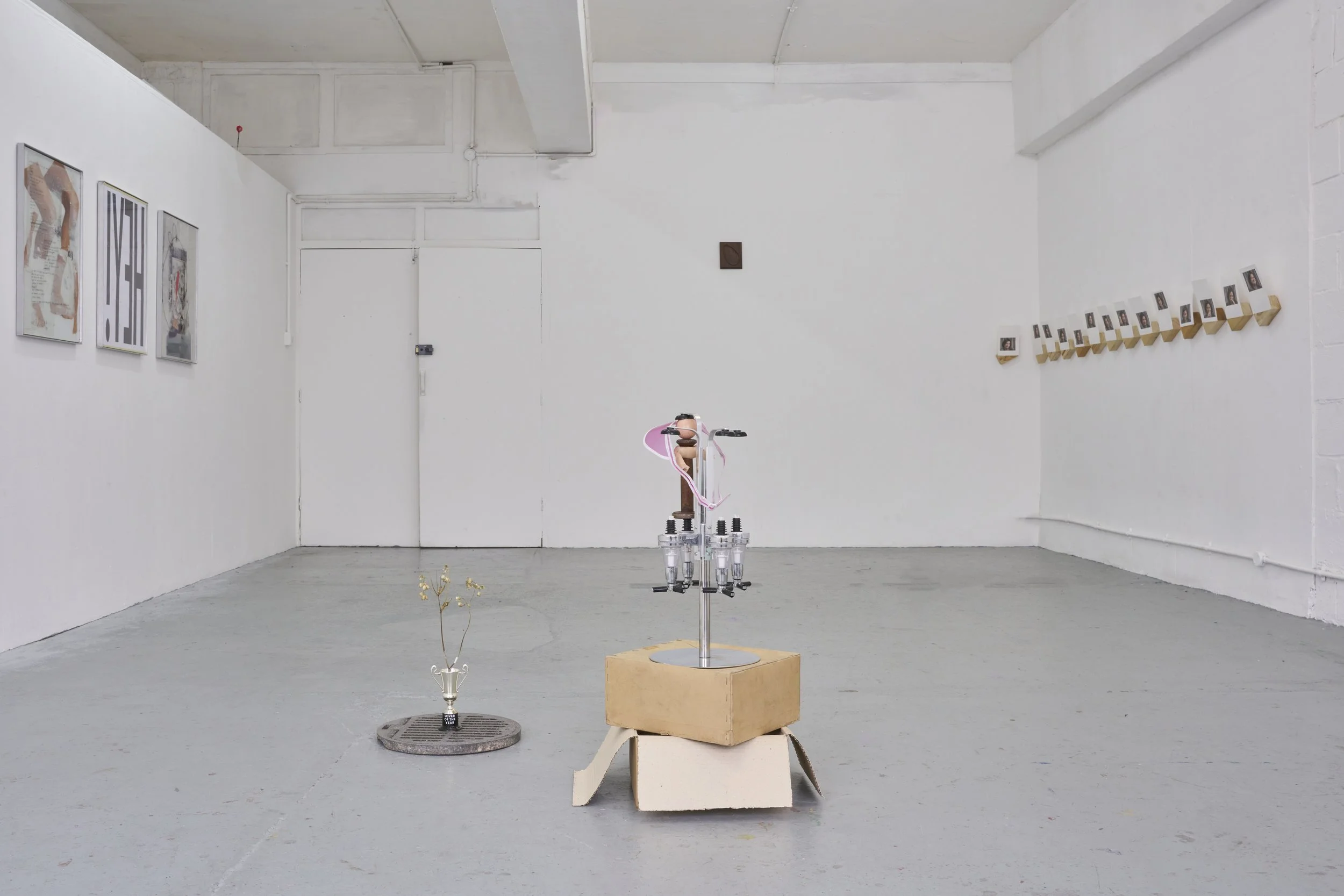
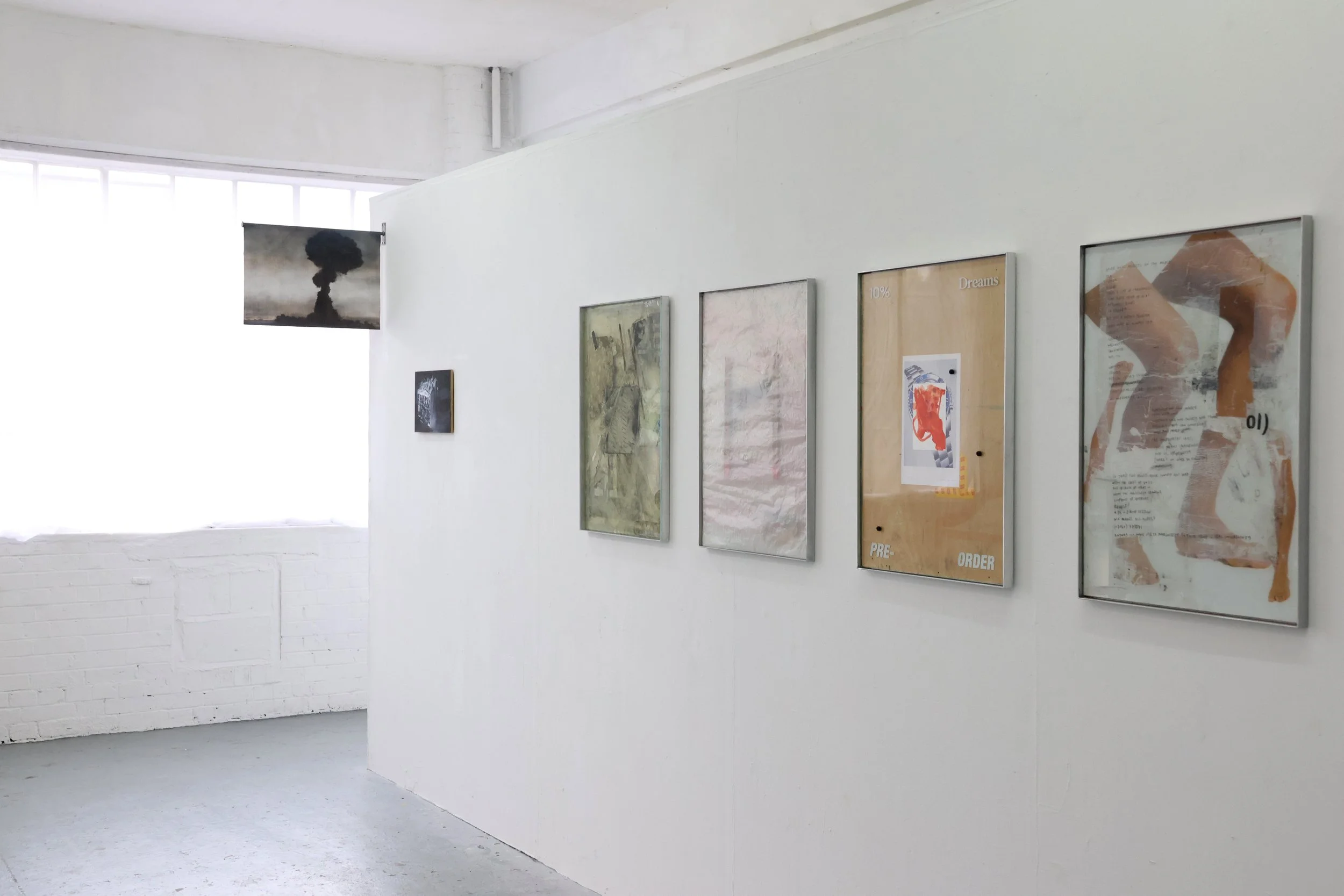
Racecar is proud to present Mirrors that eat us with works by Gem Bryant, Tegan Chinogurei, Kate Hardy, Kirsty Harris, Jeremy Hutchison, Kumbirai Makumbe, Aylin Leipold, Aimée Lyon, Iman Samuels, and Babette Whiting.
How often are we forced to face some form of our reflection? Scientists suggest that we might see ourselves from eight to eighty times on any given day. If we begin to consider the front-facing camera, the photos, and the social media accounts, how much higher is that number? What about the self-help books, podcasts, and blog posts which encourage some form of introspection, to reflect? The number doubles, triples and quadruples, like a funhouse mirror room, reflecting an innumerable number of potential “I”. These are the mirrors that eat us.
There exists, of course, the "artist myth": a collection of romanticised, damaging stereotypes, the "tortured genius", which frames creativity as a solo, innate gift born of suffering. If we are living in the “age of individualism”, what if, rather than reflect, we decided to refract? Refraction is the bending of a wave as it passes from one medium to another, a process not altogether dissimilar from that of the artist, who bends material into meaning. The studio, then — not the museum or white gallery walls — is the place of this bending. What then does it mean to exhibit in this architecture?
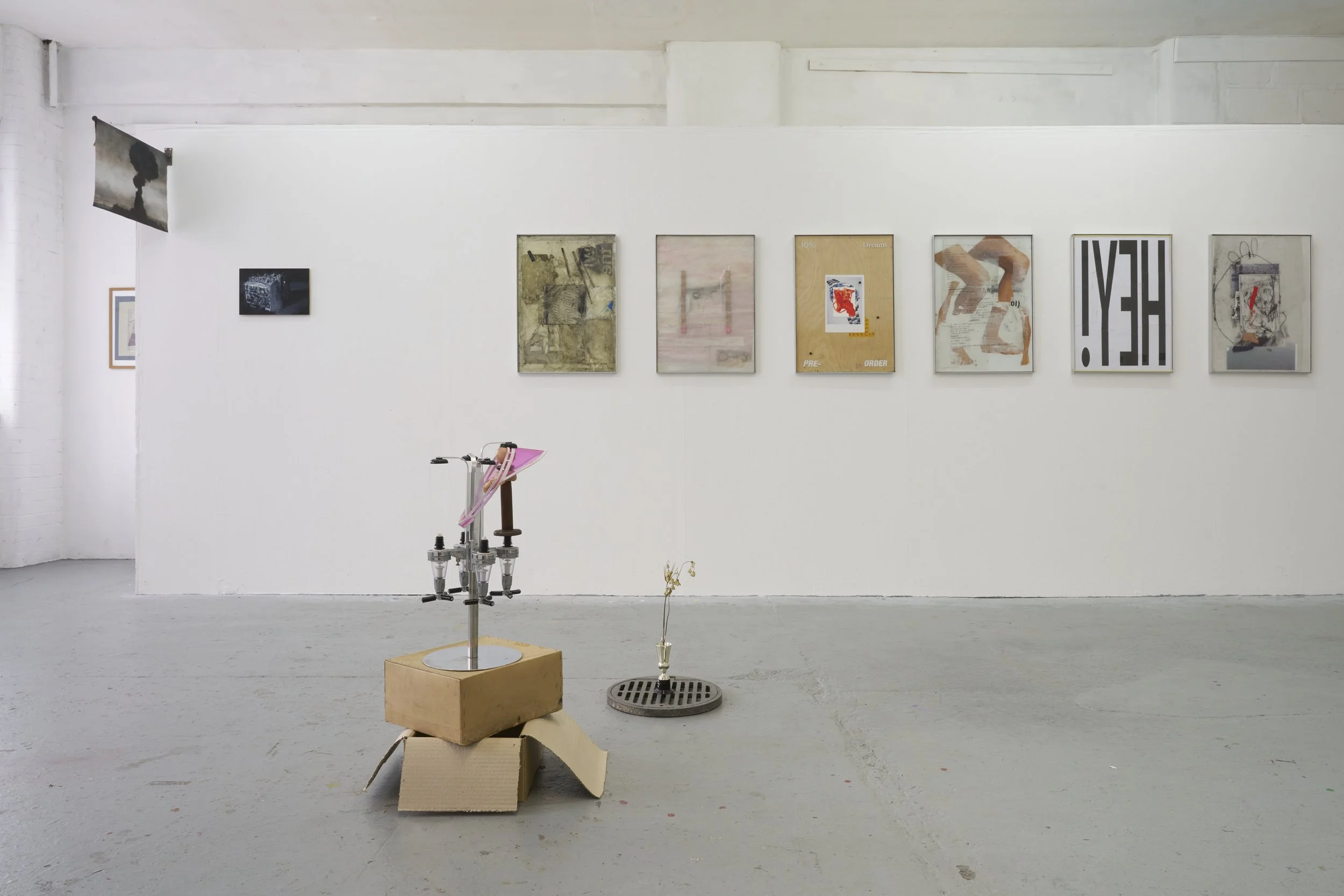
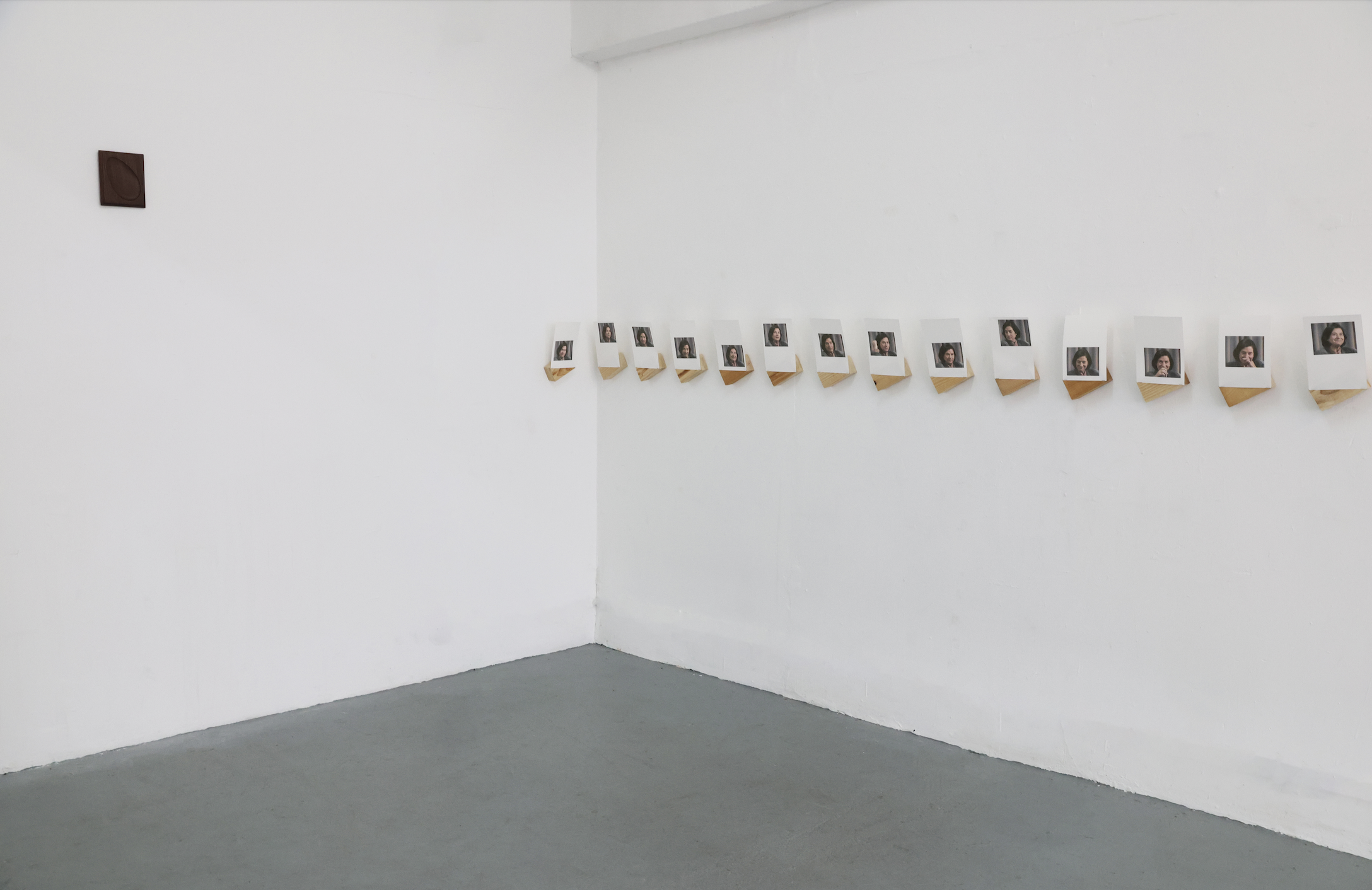
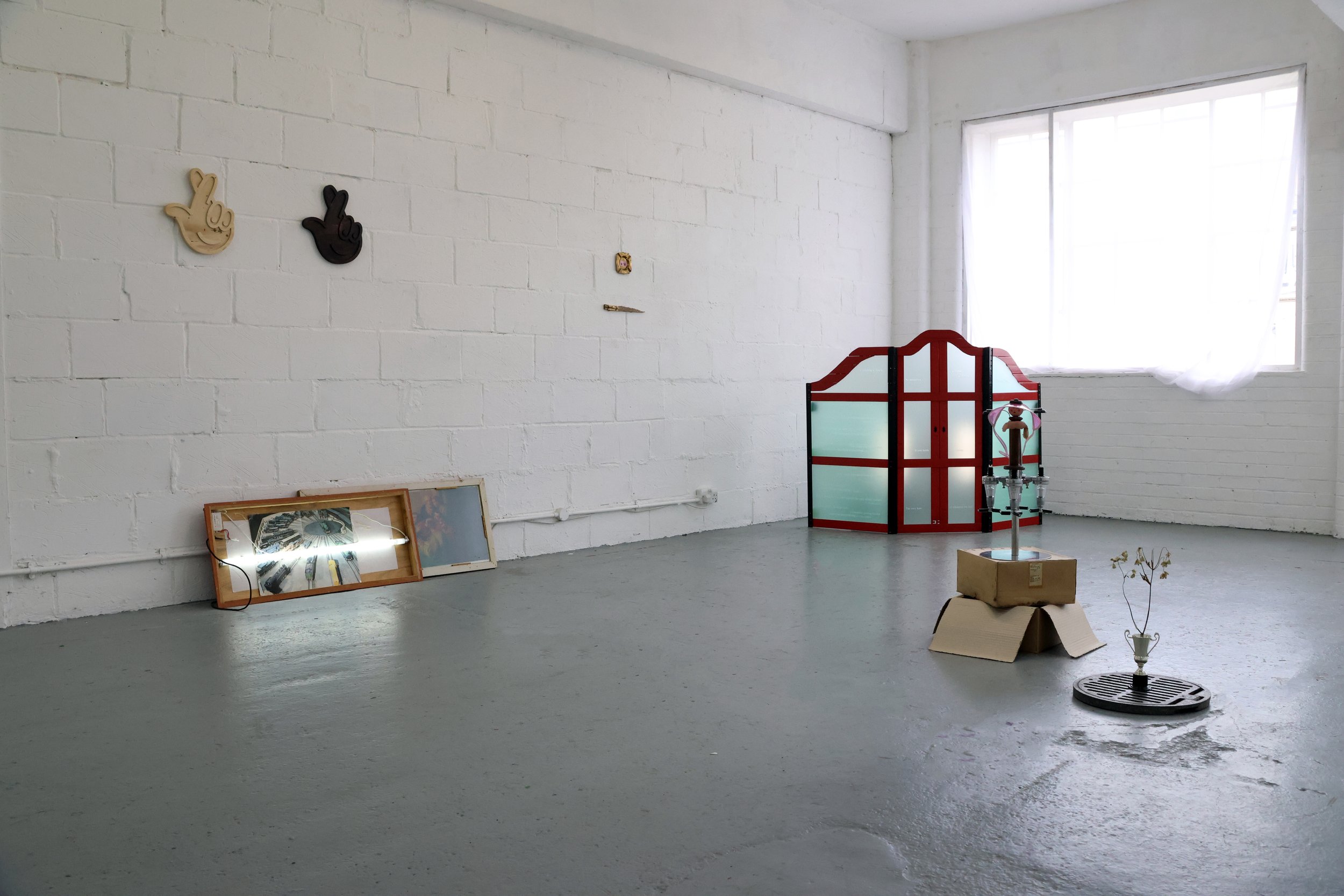
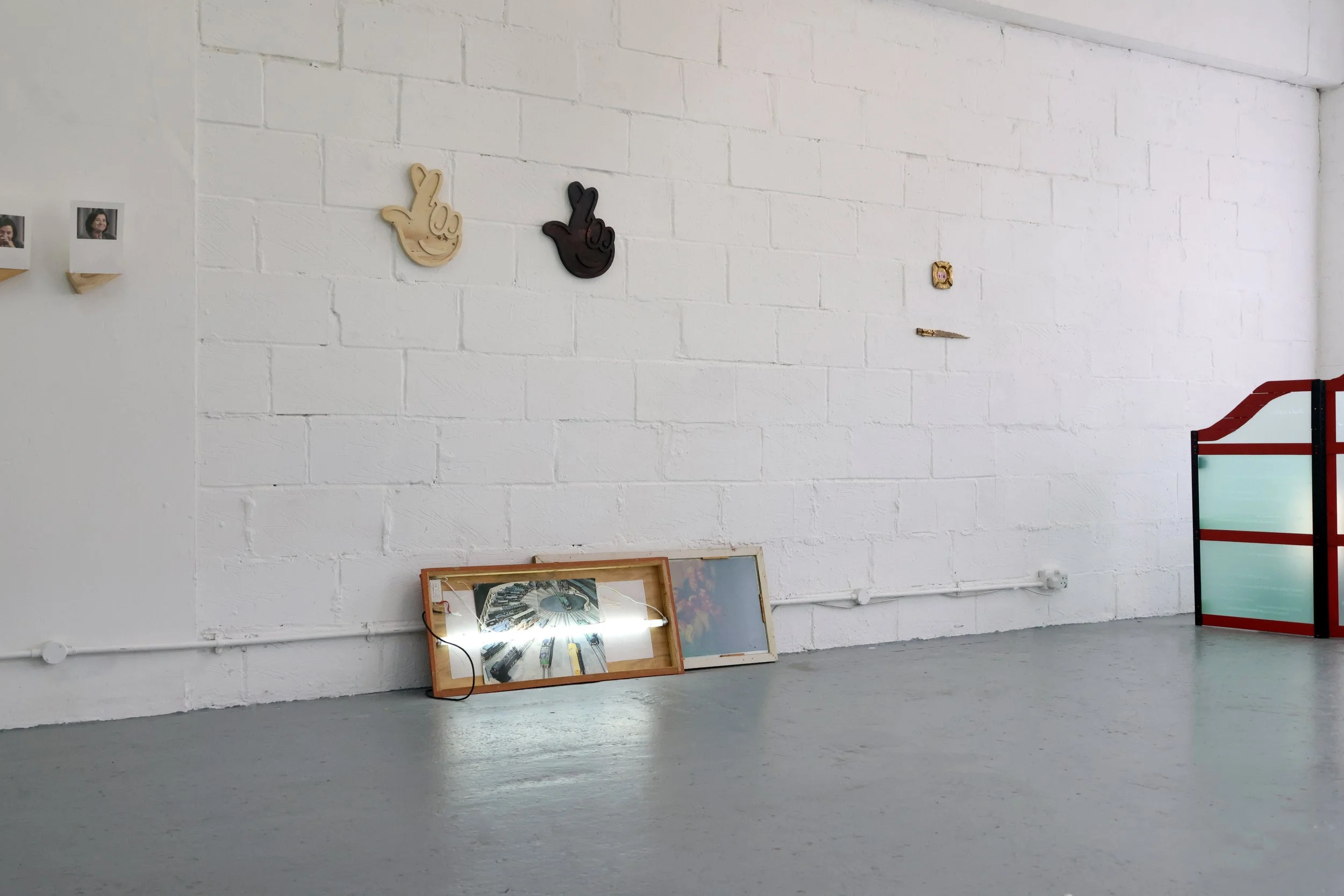
Set in Chisenhale Studio 4, Mirrors that eat us brings together eleven artists who work across collage, sculpture, oil painting, and found objects. Here, it is the artist who becomes the “myth-maker” – bending the world to examine alternative possibilities of looking. While oscillating between the archival and paraficticious, included works carry a recognisable methodological/mythological framework, to probe presupposed norms, interrogate cultural narratives, and reinterpret supposedly mundane human experiences.